Home › Minecraft › How to Make a Sticky Piston in Minecraft
How to Make a Sticky Piston in Minecraft
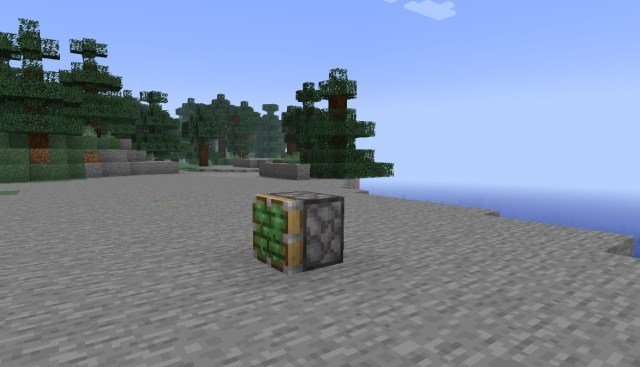
Regular pistons push. Sticky pistons push and pull — and that one difference underpins half of all redstone engineering, from hidden staircases to flying machines. The recipe could hardly be simpler; the ingredient hunt is the real project. Here's both halves.
The Recipe: One Piston, One Slimeball
Place a slimeball in a crafting slot with a piston directly beneath it — any column, in your inventory grid or a crafting table. Out comes a sticky piston, its face coated in green slime. Since a regular piston is itself made from wood, cobblestone, iron and redstone, the sticky upgrade is really just the slimeball's cost.
Short on crafting materials? Sticky pistons also generate naturally in two structures: jungle temples, where they power the arrow traps behind the lever puzzle, and ancient cities, in the redstone experiment rooms under the central portal. Break them with any tool and they drop as items.
Getting Slimeballs
Slimes are the source, and you have three hunting grounds:
- Swamps and mangrove swamps — slimes hop around at night, spawning most reliably around a full moon and never on a new moon. Go at night, bring a Looting sword.
- Slime chunks — specific underground chunks where slimes spawn below Y=40 regardless of light or moon phase. Slower to find, but they power permanent farms.
- A slime farm — once you've identified a slime chunk, a simple layered farm turns slimeballs from an expedition into a background resource. Worth it: sticky pistons get used by the dozen.
One myth to bury: honey and magma cream do not work. Only slimeballs make a piston sticky.
What Sticky Pistons Can and Can't Move
A powered sticky piston extends and pushes the block in front of it; when the signal cuts, it retracts and drags that block back with it. It can shove up to twelve blocks in a line, which is why flying machines and extendable bridges work. It pushes mobs and players around too, though it can't pull them.
Some blocks refuse to move at all — the big ones to remember:
- Obsidian and crying obsidian
- Bedrock-tier blocks like end portal frames and reinforced deepslate
- Enchanting tables, ender chests, grindstones, jukeboxes, lodestones, conduits and spawners
And a few blocks can be pushed but not pulled, because they'd break or detach: carpets, glazed terracotta, and fragile things like crops, flowers and torches. Design around it — a sticky piston will happily push a carpet but leaves it behind on the return trip.
Your First Test Build
New to pistons? Prove the mechanic in thirty seconds. Place a solid block on the ground, set a sticky piston directly behind it facing into the block, and attach a lever to the back of the piston. Flip the lever: the piston extends and pushes the block away. Flip it off: the piston retracts and pulls the block home. That push-pull loop, dressed up with timing and a few more pistons, is every secret door you've ever seen in a Minecraft video.
Frequently asked questions
Can you make a sticky piston with honey?
No. Only a slimeball works — honey and magma cream cannot substitute, despite how similar they seem.
Where do sticky pistons generate naturally?
In jungle temple traps and in the redstone rooms beneath ancient city portals. Break them with any tool to collect them.
How many blocks can a sticky piston push?
Up to twelve blocks in a line. It also pulls the block directly against its face back when it retracts, but immovable blocks like obsidian never budge.
What's the easiest way to get slimeballs?
Hunt slimes in a swamp at night, ideally near a full moon. For a permanent supply, find a slime chunk below Y=40 and build a slime farm.
More Minecraft guides
 All Minecraft Villager Jobs ExplainedUpdated 12 November 2026
 Woodland Mansion in Minecraft: How to Find and Loot OneUpdated 12 November 2026
 Mineshafts in Minecraft: Loot, Cave Spiders and How to Find OneUpdated 12 November 2026
 Redstone Components in Minecraft: A Complete GuideUpdated 12 November 2026
 All Wolf Variants in Minecraft and Where to Find ThemUpdated 12 November 2026