Home › Minecraft › How to Make Mud in Minecraft and How to Use It
How to Make Mud in Minecraft and How to Use It
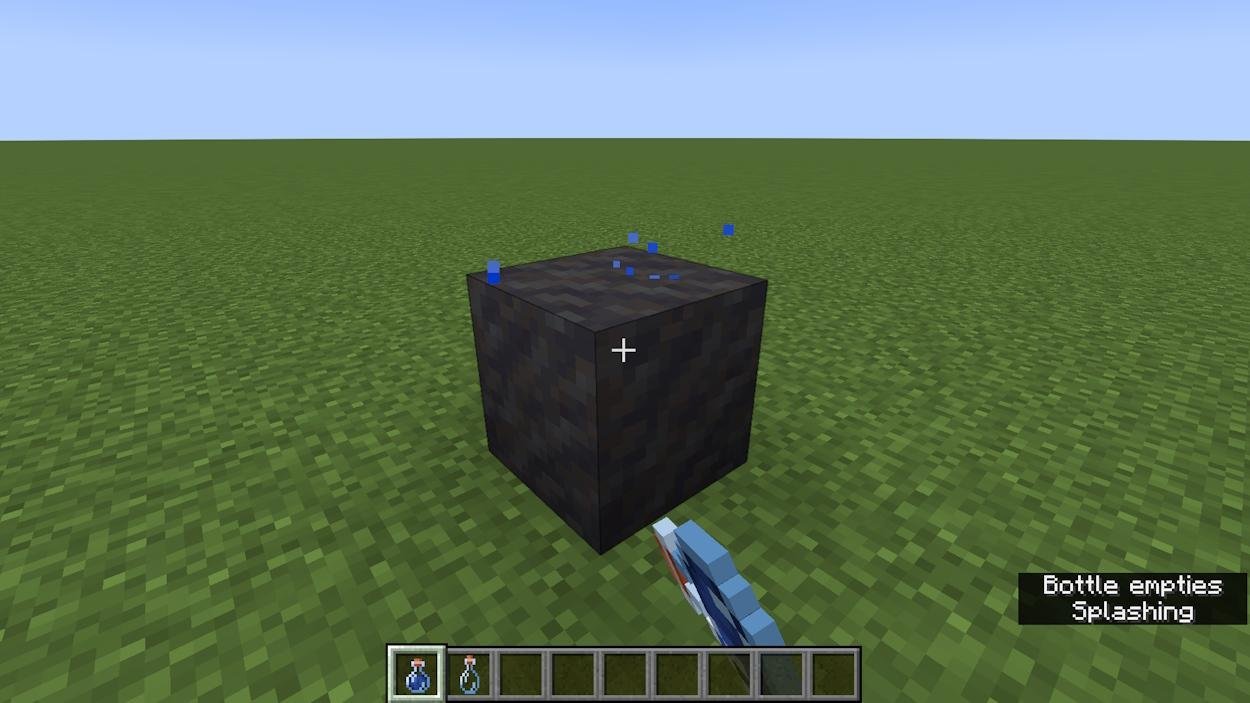
Mud is the dirt variant with a secret second life: it is a building block, a crafting ingredient and the key to infinite clay, all in one squelchy package. Whether you dig it out of a swamp or manufacture it yourself, here is how to get it and what it is good for.
Making Mud with a Water Bottle
Mud is one of the few natural blocks you can produce on demand. You need two things:
| Item | How to Get It |
|---|---|
| Water bottle | Craft a glass bottle from 3 glass in a V shape (the recipe yields 3 bottles), then right-click any water source to fill it |
| Dirt block | Break grass or dirt anywhere — it is never far away |
Hold the filled water bottle, aim at a placed dirt block and right-click. The water is consumed and the dirt becomes mud instantly. Refill and repeat.
Doing this one block at a time is slow, so use the classic shortcut: sink your dirt blocks in shallow water first. Standing in the shallows, you can spam right-click — each click converts a block while the bottle refills from the water around you — and convert a whole stack of dirt in well under a minute. For serious quantities, dispensers can automate the same trick into a genuine mud farm.
Finding Mud Naturally
Mud generates as the ground itself in mangrove swamps, covering the surface and a few layers beneath it. Mangrove swamps tend to appear next to other warm biomes — deserts, savannas, jungles and regular swamps — so if you have found one of those, search the neighborhood. A shovel is the fastest tool for digging it up; no enchantments required.
What Mud Is Used For
Packed Mud and Muddy Mangrove Roots
Combine one mud and one wheat (shapeless) to make packed mud, a clean building block that pairs well with terracotta and jungle wood and is the base for mud bricks and their stairs, slabs and walls. Combine one mud and one mangrove roots for muddy mangrove roots, a solid, non-transparent variant that is lovely for terraforming.
The Hopper Trick
Mud is slightly shorter than a full block, which has a sneaky consequence: a hopper underneath mud can pull in items resting on top of it. Sugar cane grows on mud, so a cane farm can collect through the floor with plain hoppers — no hopper minecarts needed. Falling blocks like sand and gravel also shatter into items when they land on mud.
Renewable Clay
Place mud on a block with a pointed dripstone hanging beneath it. The dripstone slowly wicks the water out, and the mud dries into a clay block. Dirt and water in, clay out — clay, terracotta and bricks all become fully renewable with a big enough drying rack.
You cannot hoe mud or plant wheat, carrots or potatoes in it, though sugar cane, bamboo and big dripleaves sit on it happily, and ordinary flowers and saplings can be placed on top. For one humble block, mud works hard.
Frequently asked questions
Can you turn mud back into dirt?
No. Once dirt becomes mud there is no way to convert it back, so only convert what you actually need.
Can you grow crops on mud?
You cannot hoe mud or plant wheat, carrots or potatoes on it. Sugar cane, bamboo and big dripleaves can be placed on mud, along with flowers and saplings.
How do you turn mud into clay?
Set the mud block on top of another block with a pointed dripstone attached underneath. The dripstone slowly drains the water and the mud dries into a clay block.
Where does mud generate naturally?
Mangrove swamps are covered in it — the surface and a few layers below. Look for mangrove swamps near other warm biomes like deserts, jungles and regular swamps.
More Minecraft guides
 Sea Pickles in Minecraft: How to Get, Farm and Use ThemUpdated 12 November 2026
 What Does Smite Do in Minecraft? Smite Enchantment GuideUpdated 12 November 2026
 How to Turn On Vibrant Visuals in MinecraftUpdated 12 November 2026
 What Do Horses Eat in Minecraft? Every Food and Its EffectsUpdated 12 November 2026
 All Wolf Variants in Minecraft and Where to Find ThemUpdated 12 November 2026