Home › Pokémon › Pokémon Type Chart Explained: Every Strength, Weakness and Immunity
Pokémon Type Chart Explained: Every Strength, Weakness and Immunity
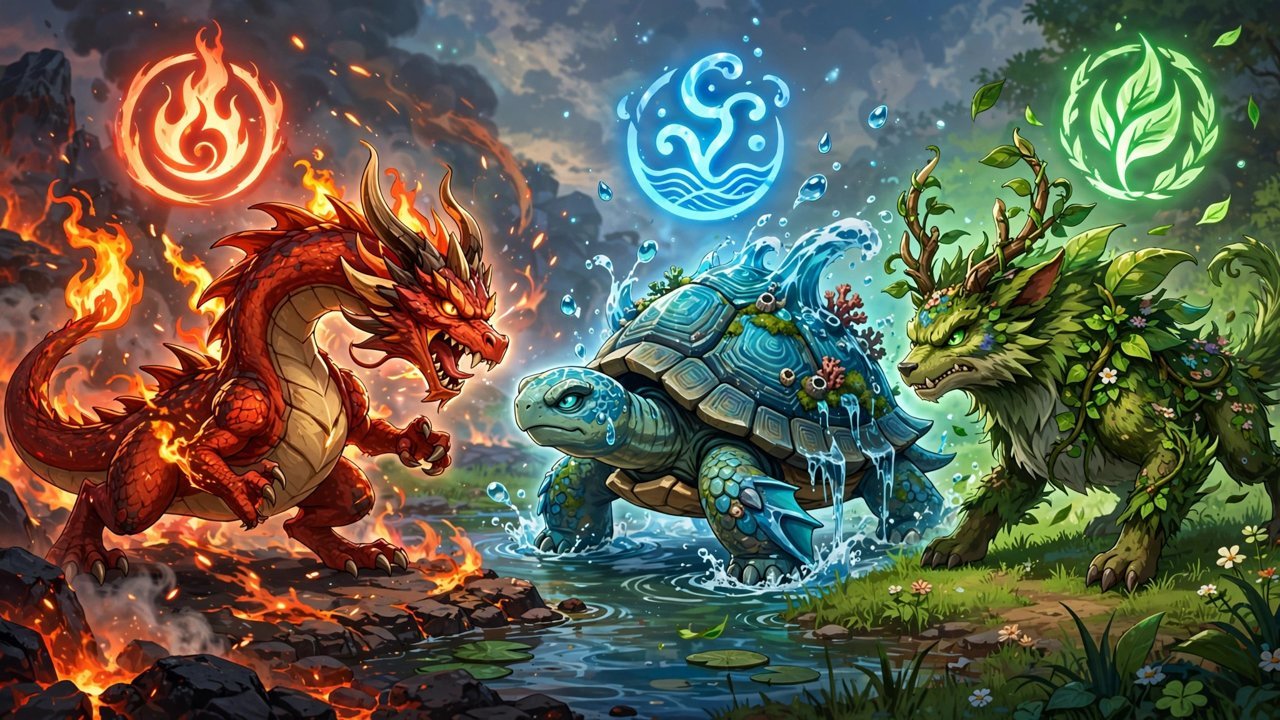
Every Pokémon belongs to one or two of 18 types, and every move has a type of its own. When those two things meet in battle, the type chart decides whether the hit lands softly, normally, or hard enough to end the fight in one blow. It has been the backbone of Pokémon battles since Red and Green launched in Japan in 1996, and it still decides team building in Scarlet and Violet, Legends: Z-A and Pokémon GO today.
How Type Effectiveness Works
There are four possible outcomes when a move connects in the main series games:
- Super effective: the move deals double damage (×2). Fire melts Grass, Water douses Fire, Electric zaps Water.
- Not very effective: the move deals half damage (×0.5) because the defender resists that type.
- No effect: the move deals zero damage. Ground Pokémon are completely immune to Electric moves, no matter how strong they are.
- Neutral: everything else lands for normal (×1) damage.
Dual-type Pokémon stack these results. A Water/Flying Pokémon like Gyarados is weak to Electric through both of its types, so an Electric move hits it for a punishing ×4. Charizard, Fire/Flying, takes ×4 damage from Rock but only ×0.25 from Bug and Grass, which both of its types resist. When one type is weak and the other resists, the two cancel out to neutral damage — Reshiram, Fire/Dragon, shrugs off Ice moves that would trouble a pure Dragon. And immunity always wins: Gliscor is Ground/Flying, and even though Flying fears Electric, Ground's immunity means Electric moves do nothing at all.
The Type Chart at a Glance
This summary covers each attacking type's strengths and the weaknesses of each defending type. Keep it nearby when you are picking a team or staring down a raid boss.
| Type | Hits Super Effectively | Weak Against (as defender) |
|---|---|---|
| Normal | — | Fighting |
| Fire | Grass, Ice, Bug, Steel | Water, Ground, Rock |
| Water | Fire, Ground, Rock | Electric, Grass |
| Electric | Water, Flying | Ground |
| Grass | Water, Ground, Rock | Fire, Ice, Poison, Flying, Bug |
| Ice | Grass, Ground, Flying, Dragon | Fire, Fighting, Rock, Steel |
| Fighting | Normal, Ice, Rock, Dark, Steel | Flying, Psychic, Fairy |
| Poison | Grass, Fairy | Ground, Psychic |
| Ground | Fire, Electric, Poison, Rock, Steel | Water, Grass, Ice |
| Flying | Grass, Fighting, Bug | Electric, Ice, Rock |
| Psychic | Fighting, Poison | Bug, Ghost, Dark |
| Bug | Grass, Psychic, Dark | Fire, Flying, Rock |
| Rock | Fire, Ice, Flying, Bug | Water, Grass, Fighting, Ground, Steel |
| Ghost | Psychic, Ghost | Ghost, Dark |
| Dragon | Dragon | Ice, Dragon, Fairy |
| Dark | Psychic, Ghost | Fighting, Bug, Fairy |
| Steel | Ice, Rock, Fairy | Fire, Fighting, Ground |
| Fairy | Fighting, Dragon, Dark | Poison, Steel |
There are also seven full immunities worth memorising: Normal and Ghost cannot touch each other, Electric fails against Ground, Ground fails against Flying, Fighting and Normal fail against Ghost, Psychic fails against Dark, Poison fails against Steel, and Dragon fails against Fairy.
STAB: The Bonus Hiding in Plain Sight
When a Pokémon uses a move that matches one of its own types, it earns STAB — Same Type Attack Bonus — worth ×1.5 damage in the main series. A Psychic-type using a Psychic move simply hits harder than a non-Psychic using the same move, and dual-types get STAB on both of their types. The math multiplies together: base damage × STAB × type effectiveness, so a super-effective STAB move from a 100-power attack lands for 300. The ability Adaptability pushes STAB to ×2, and Terastallizing into a type you already have does the same in Scarlet and Violet.
How Pokémon GO Changes the Numbers
GO uses gentler multipliers to suit its real-time battles. Super effective is ×1.6 instead of ×2, not very effective is ×0.625 instead of ×0.5, and a double weakness stacks to ×2.56 rather than ×4. True immunities do not exist in GO: a matchup that would deal zero damage in the main series instead deals ×0.39, so an Electric move against a Ground-type still chips away a little health. GO's STAB bonus is also smaller, at ×1.2.
Tera Types Shake Up the Chart
Scarlet and Violet let a Pokémon Terastallize once per battle, changing its defensive type to its Tera Type while keeping STAB on its original types and gaining it on the new one. A nineteenth option, the Stellar Tera Type, keeps your original weaknesses but gives a one-time power boost to every move type you use. It is the one wrinkle in an otherwise stable system — the chart itself has not changed since Fairy arrived in Generation 6 to keep Dragon in check.
Frequently asked questions
How many Pokémon types are there?
There are 18 types in the main series: Normal, Fire, Water, Electric, Grass, Ice, Fighting, Poison, Ground, Flying, Psychic, Bug, Rock, Ghost, Dragon, Dark, Steel and Fairy. Scarlet and Violet add a 19th Tera-only option, the Stellar type.
What does STAB mean in Pokémon?
STAB stands for Same Type Attack Bonus. When a Pokémon attacks with a move matching one of its own types, the move deals ×1.5 damage in the main series games (×1.2 in Pokémon GO). Adaptability and matching-type Terastallization raise it to ×2.
How does a Pokémon take ×4 damage?
When both of a dual-type Pokémon's types are weak to the same attacking type, the ×2 multipliers stack. Gyarados (Water/Flying) takes ×4 from Electric moves, and Charizard (Fire/Flying) takes ×4 from Rock moves.
Do immunities work the same in Pokémon GO?
No. In the main series an immune matchup deals zero damage, but Pokémon GO softens it to ×0.39 damage. GO also uses smaller multipliers overall: ×1.6 for super effective instead of ×2, and ×2.56 for a double weakness instead of ×4.
More Pokémon guides
 All Mega Evolutions in Pokémon Legends: Z-A — New and ReturningUpdated 12 November 2026
 Pokémon Legends: Z-A Starters — Chikorita, Tepig or Totodile?Updated 12 November 2026
 All 20 Wild Zones in Pokémon Legends: Z-A and How to Unlock ThemUpdated 12 November 2026
 The Rarest Pokémon Cards Ever — and Why They're Worth a FortuneUpdated 12 November 2026
 How to Transfer Pokémon from Pokémon GO to Pokémon HOMEUpdated 12 November 2026