Home › Minecraft › How to Make a Lead in Minecraft
How to Make a Lead in Minecraft
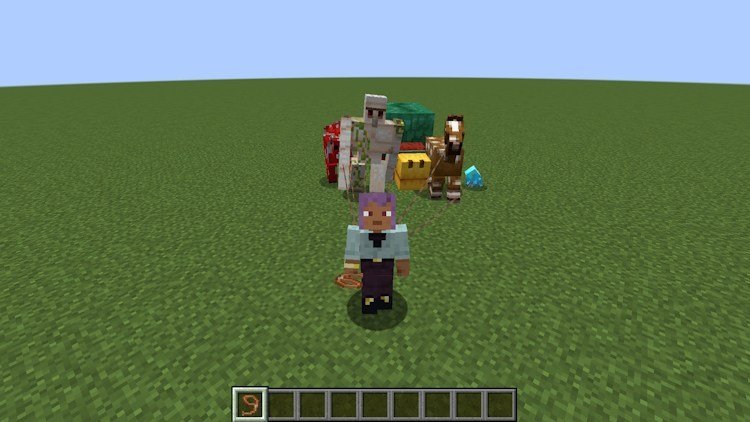
Moving animals in Minecraft used to mean pushing a stubborn cow uphill for twenty minutes. The lead — also called a leash — turns that whole chore into a walk in the park. Attach one to almost any passive mob and it will follow you across the world, or tie it to a fence and the mob stays put. Here is how to get leads and use them well.
Crafting a Lead
The current recipe needs only string:
| Material | Amount | How to Get It |
|---|---|---|
| String | 5 | Dropped by spiders (0–2 each), or from breaking cobwebs |
| Crafting Table | 1 | 4 planks |
- Place two string in the first two slots of the top row.
- Place two more string in the first two slots of the middle row.
- Place the fifth string in the bottom-right corner.
- Collect two leads from the result slot.
If you remember leads costing a slimeball, you are not imagining it — older versions of the recipe used four string plus a slimeball. The slimeball was removed in newer updates, making leads far cheaper than they used to be.
Getting Leads Without Crafting
- Wandering traders: every trader arrives holding two llamas on leads. Put the llamas in a boat or minecart and move them away, or simply kill the llamas, and the leads snap and drop as free items.
- Chest loot: leads appear in ancient city chests (about 16%), woodland mansion chests (about 28%), and buried treasure on Bedrock (about 34%).
- Archaeology: brushing suspicious gravel in trail ruins has a small chance — around 2% — of revealing a lead.
How to Use a Lead
Hold the lead and use it on a mob to leash it. You can leash several mobs at once, each with its own lead, and walk the whole group like a small caravan. Use the lead on the mob again, or use shears, to release it. When you arrive, use the lead on any fence post to tie the mob there — right-clicking the fence knots every leashed mob you are holding to it.
Mind the stretch limit: a lead snaps if the mob gets more than about 12 blocks from you (16 for a happy ghast), if a projectile cuts it, or if something solid blocks the line. Leashed mobs can even be towed across water — though the safer route for long ocean trips is putting the mob in a boat and leashing the boat itself.
Moving Mobs Over Long Distances
For a cross-country move, patience wins. Walk at a steady pace, because sprinting and especially flying quickly stretches the lead past its limit. Cross open ground in daylight, cut wide corners around trees and fences, and stop to let stragglers catch up when terrain gets steep. For genuinely long journeys, combine methods: leash the mob to walk it out of the hills, then load it into a boat for the flat and watery stretches, towing the boat by lead where the edition allows. It is slower than you'd like, but everything arrives alive.
Which Mobs Can Be Leashed?
Almost every friendly and neutral mob: farm animals, wolves, cats, parrots, horses and their relatives, llamas, goats, iron and snow golems, axolotls, dolphins, squid, frogs, foxes, polar bears, striders, allays and sniffers, to name a few. The big exception is villagers — they cannot be leashed in vanilla Minecraft, so move them by boat or minecart instead.
Frequently asked questions
Do you still need a slimeball to make a lead?
Not anymore. The recipe was changed in newer versions of Minecraft — a lead now costs just five string and produces two leads per craft.
Can you put a lead on a villager?
No, villagers cannot be leashed in vanilla Minecraft. Put the villager in a boat or minecart instead — you can even leash the boat to tow it.
Why does my lead keep breaking?
Leads snap when the mob strays more than about 12 blocks away, when a projectile hits the line, when a block blocks the connection, or when you change dimensions. Slow down on rough terrain and keep the path clear.
How do you get leads from a wandering trader without fighting?
Load the trader's llamas into a boat or minecart and move them away from the trader. The stretched leads snap and drop as items, no combat needed.
More Minecraft guides
 How to Tame a Parrot in MinecraftUpdated 12 November 2026
 How to Make an Iron Farm in MinecraftUpdated 12 November 2026
 Minecraft Fishing Guide: How to Fish, Loot Tables and Best EnchantmentsUpdated 12 November 2026
 Piglin Bartering in Minecraft: How to Trade with PiglinsUpdated 12 November 2026
 Minecraft Brewing Guide: All Potion RecipesUpdated 12 November 2026