Home › Minecraft › How to Make Green Dye in Minecraft
How to Make Green Dye in Minecraft
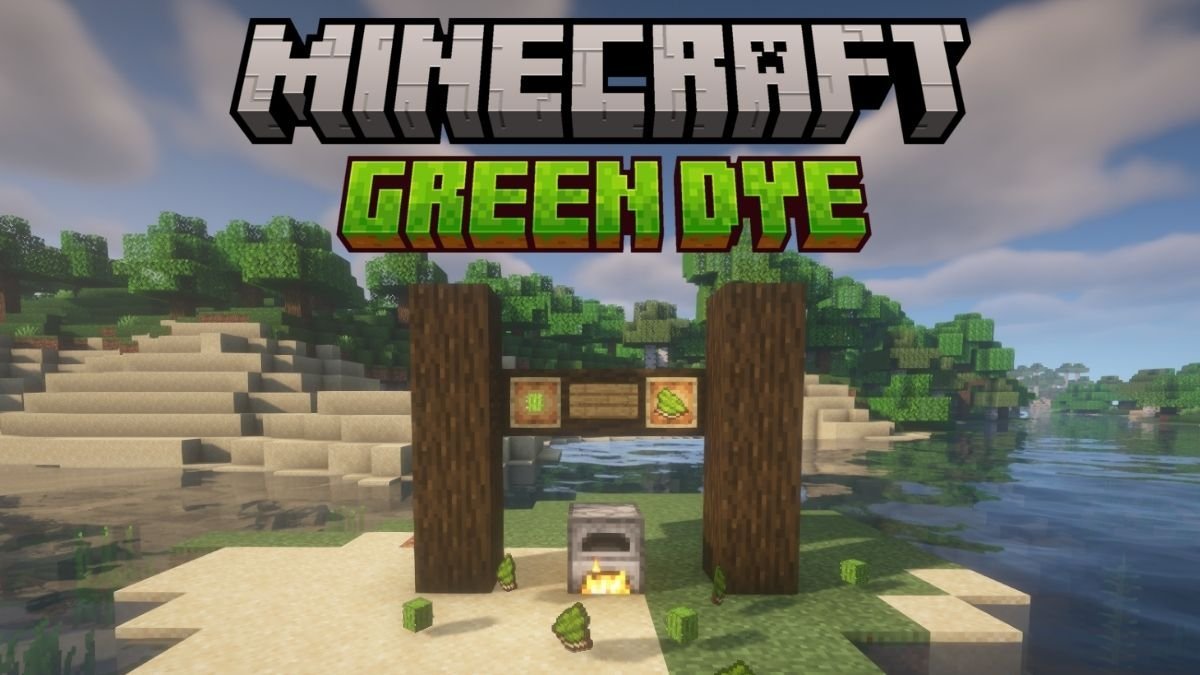
Of the sixteen dyes in Minecraft, green is the odd one out. Almost every other colour is crafted straight from a flower or a dropped item, but green dye only exists because a furnace got involved. The good news: the ingredient is a plant you can farm infinitely, so once you have made your first batch you will never be short of it again.
What You Need
| Item | Amount | Where to Get It |
|---|---|---|
| Cactus | 1 per dye | Desert and badlands biomes |
| Furnace | 1 | Crafted from 8 cobblestone |
| Fuel | Any | Coal, charcoal, logs, planks — anything burnable |
Cactus grows in the dry biomes, deserts most reliably. If you are starting from zero, our guide to getting cactus covers the trader and igloo shortcuts for worlds where the desert is a long walk away. For fuel, do not waste good coal on a handful of dye if you can help it — a few planks or sticks will smelt several cacti each.
Smelting Green Dye, Step by Step
- Place the furnace and open it.
- Put your fuel in the bottom slot.
- Put cactus in the top slot — stack as many as you want dye.
- Wait a few seconds per piece while the arrow fills.
- Take the green dye from the output slot, and collect the small XP bonus that comes with it.
That XP is a genuine side benefit. A cactus farm feeding a furnace is one of the classic early XP setups, particularly on Bedrock, because the plant grows for free while you do other things and every smelt pays out a little experience when you collect the dye.
Finding Green Dye Without a Furnace
Two alternatives exist, though neither beats farming. Desert village house chests have roughly a 14.3% chance of containing green dye — worth checking if you are looting a village anyway. Wandering traders can also sell you three green dyes for a single emerald, which is steep for dye but fair for skipping a desert hunt entirely.
Bonus: Making Lime Dye
Lime is the colour most players actually want green dye for. Combine one green dye with one white dye in a crafting grid (on Bedrock, bone meal works in place of the white dye) and you get two lime dyes back. Alternatively, smelting a sea pickle in a furnace produces lime dye directly, and wandering traders occasionally offer it too.
What Green Dye Is For
Like all dyes, it recolours wool, beds, carpets, banners, terracotta, stained glass and concrete powder, and it dyes sheep directly for a renewable supply of coloured wool. Green and lime together anchor most nature-themed palettes — creeper banners, garden builds, camouflage, slime displays — so a desert trip and a small cactus patch early in a world pays off for the rest of the playthrough.
Scaling Up: A Simple Cactus Supply
Because the recipe is one cactus to one dye, running short is purely a farming problem. Even a single row of cacti on sand, harvested by breaking the bottom block whenever the columns reach three high, out-produces most dye projects. Players who want it fully hands-off use the plant's own weakness: place a fence post or similar block where the next segment would grow, and the new segment breaks itself and drops as an item, ready for a hopper to collect. Feed that stream toward a furnace and green dye effectively crafts itself while you are off doing something more interesting.
Frequently asked questions
Can you make green dye without cactus?
Not by crafting or smelting — cactus is the only ingredient that produces it. Your alternatives are finding it in desert village house chests (about a 14.3% chance) or buying three from a wandering trader for one emerald.
How do you make lime dye in Minecraft?
Combine one green dye with one white dye in a crafting grid to get two lime dyes — on Bedrock, bone meal can stand in for the white dye. Smelting a sea pickle also gives lime dye directly.
How much XP does smelting cactus give?
Each cactus smelted pays a small amount of XP when you collect the green dye. It adds up: a cactus farm feeding furnaces is a popular passive XP source, especially on Bedrock.
Where does cactus grow in Minecraft?
In deserts most commonly, and more sparsely in badlands. It can also be bought from wandering traders or found potted in igloo basements and desert village houses.
More Minecraft guides
 What Do Llamas Eat in Minecraft? Wheat and Hay Bales ExplainedUpdated 12 November 2026
 What Do Pigs Eat in Minecraft? (Breeding Food Guide)Updated 12 November 2026
 What Do Polar Bears Eat in Minecraft? (The Honest Answer)Updated 12 November 2026
 What Do Horses Eat in Minecraft? Every Food and Its EffectsUpdated 12 November 2026
 All Wolf Variants in Minecraft and Where to Find ThemUpdated 12 November 2026