Home › Minecraft › How to Make a Geyser in Minecraft
How to Make a Geyser in Minecraft
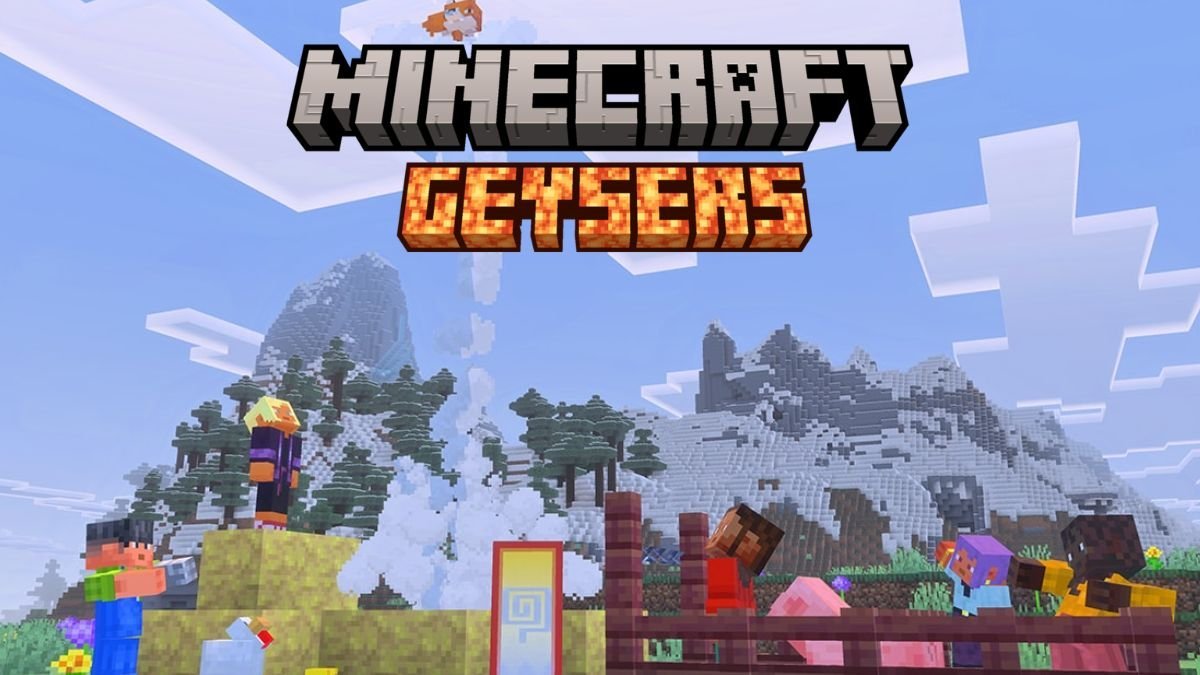
Most Minecraft builds sit still. A geyser does the opposite: it waits quietly, rumbles, and then throws everything standing on it twenty blocks into the sky. The mechanic arrived with the Chaos Cubed update and runs on the new Potent Sulfur block, and once you understand the layering, you can tune one like an instrument.
Items Required
| Item | Amount | Where to Get It |
|---|---|---|
| Potent Sulfur block | 1 | Mined in Sulfur Caves or crafted from nine sulfur blocks |
| Magma block | 1 (method 1) | Nether, ruined portals, ocean ruins |
| Lava bucket | 1 (method 2) | Any surface or cave lava pool |
| Water buckets | 2 or more | Any water source |
| Building blocks | A few | Any solid block, for lining the pit |
Method 1: Magma Block (Periodic Geyser)
- Dig a square pit at least three blocks deep, or build the walls up with blocks.
- Place the magma block at the very bottom.
- Set the Potent Sulfur block directly on top of the magma.
- Flood the pit with water so it becomes a proper water source. The water turns green, showing it has become acidic sulfur water.
- Wait for the first eruption cycle. Done — your geyser is alive.
Method 2: Lava (Continuous Geyser)
- Dig a pit two to five blocks deep.
- Place the Potent Sulfur block at the centre of the floor, then fill the space directly beneath it with lava from the bucket.
- Wall the lava in on all four sides so it can never touch the water directly and turn to stone or obsidian.
- Fill the pit with water sources, keeping the Potent Sulfur one to four blocks below the surface.
The difference matters: lava underneath makes the geyser fire continuously, while a magma block (or a very deep placement) gives you a periodic geyser that sleeps between eruptions.
How Geyser Height and Timing Work
The maths is refreshingly simple: geyser height = 5 × water height. The eruption passes through non-solid blocks like copper grates and glass, but any solid block above it caps the jet.
| Water Height | Dormant Duration | Eruption Duration | Geyser Height |
|---|---|---|---|
| 1 block | 15–30 seconds | 1–2 seconds | 5 blocks |
| 2 blocks | 25–40 seconds | 2–3 seconds | 10 blocks |
| 3 blocks | 35–50 seconds | 3–4 seconds | 15 blocks |
| 4 blocks | 45–60 seconds | 4–5 seconds | 20 blocks |
The Best Uses for a Geyser
- Elevators: Enclose the jet in a glass shaft and add a dispenser that feeds lava under the sulfur on demand, and a button press launches you up. Unpredictable compared to a bubble column, but far more fun.
- Elytra launcher: Get launched, spread your elytra at the top of the arc, and glide away. Twenty free blocks of altitude is a lot of glide distance.
- Traps and pranks: Hide a geyser under a innocent-looking pool and let it throw your friends into the air — or into an obsidian box waiting at the top. The jet itself deals no damage; the landing is their problem.
- Decoration: A small geyser inside a train engine or factory chimney makes convincing moving smoke for industrial builds.
Build your first one somewhere open with plenty of vertical clearance, learn its rhythm, and then start hiding them everywhere.
Frequently asked questions
Can a geyser work without Potent Sulfur?
No. The Potent Sulfur block is the trigger for the whole mechanic — it is what reacts with the heat below and pressurises the water above it.
What is the maximum height of a Minecraft geyser?
20 blocks, achieved with the maximum four blocks of water above the Potent Sulfur. Each block of water adds five blocks of eruption height.
Do geysers damage players?
The eruption itself deals no damage at all. Any harm comes afterwards, from the fall when you land — so bring slow falling potions or land in water.
How do I make a geyser erupt constantly instead of periodically?
Use lava directly beneath the Potent Sulfur instead of a magma block. The lava version stays active all the time, while the magma version sleeps between eruptions.
More Minecraft guides
 What Do Horses Eat in Minecraft? Every Food and Its EffectsUpdated 12 November 2026
 When Did Minecraft Come Out? Full Release TimelineUpdated 12 November 2026
 6 Best Uses of Wind Charge in MinecraftUpdated 12 November 2026
 6 Best Uses of Wither Roses in MinecraftUpdated 12 November 2026
 All Wolf Variants in Minecraft and Where to Find ThemUpdated 12 November 2026