Home › Minecraft › How to Make Bone Meal in Minecraft
How to Make Bone Meal in Minecraft
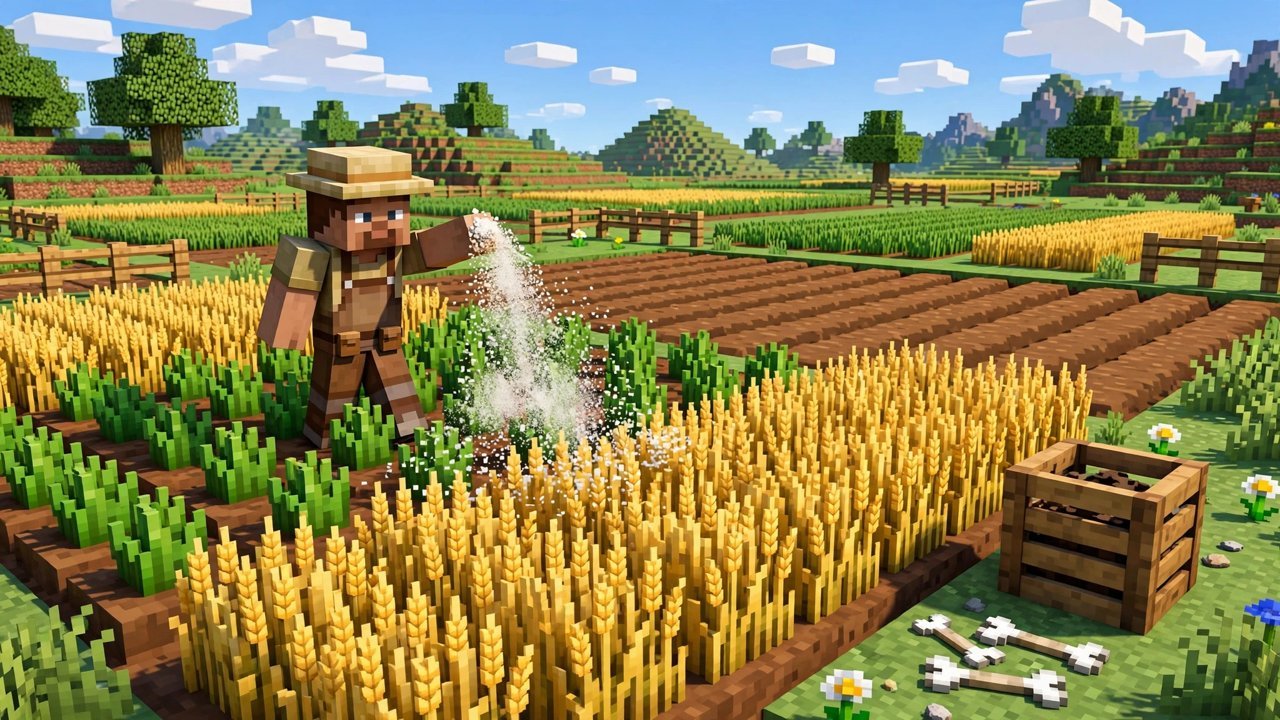
Bone meal is the closest thing Minecraft has to a fast-forward button. It pushes crops toward maturity, grows saplings on the spot, and turns a plain grass block into a scattering of grass and flowers. Because so many farms quietly depend on it, knowing every way to produce it — and which one scales — is worth five minutes.
Method 1: Crafting Bones
Place a single bone anywhere in a crafting grid and you get 3 bone meal. Bones drop from skeletons, which spawn almost everywhere and are easy to farm with a basic mob farm or a skeleton spawner setup. This is the method most early-game players live on, and it's perfectly fine until your farms get ambitious.
Method 2: Bone Blocks (The Bulk Route)
A bone block in the crafting grid breaks down into 9 bone meal — and the reverse recipe (9 bone meal into 1 block) makes bone blocks a compact storage format too. Bone blocks generate naturally in the soul sand valley biome in the Nether, where they form fossil-like structures you can mine with any pickaxe. One decent mining trip there can supply thousands of bone meal, making this the fastest legitimate bulk source in the game.
Method 3: The Composter
Fill a composter with plant-like items and, once it reaches compost level 7, using it once more harvests 1 bone meal. Each item has a chance to raise the level by one:
| Fill Chance | Example Items |
|---|---|
| ~30% | Seeds, saplings, leaves, kelp |
| ~50% | Cactus, vines, melon slices |
| ~65% | Wheat, carrots, potatoes, flowers |
| ~85% | Baked potatoes, bread, cookies |
| 100% | Cake, pumpkin pie |
Composting is slower per unit, but it runs on waste — excess seeds, cactus overflow, moss — and it's fully automatable with hoppers feeding the top and pulling bone meal from the bottom. Many large farms pair a composter line with a moss or cactus farm and never think about bone meal again.
Smaller Sources
On Java Edition, fish (cod, salmon, tropical fish and pufferfish) have a 5% chance of dropping bone meal when killed; on Bedrock they drop bones instead. Wandering traders on Bedrock also sell 3 bone meal for an emerald, which is a terrible rate but occasionally convenient.
What to Spend It On
Instant-growing wheat, carrots and saplings is the classic use, but the sneaky-important one is grass blocks: bonemealing grass spreads tall grass and flowers, bonemealing moss blocks expands a moss patch, and bonemealing nylium in the Nether grows the fungi and roots of that biome. One conversion is impossible, though — bone meal can't be turned back into bones.
One efficiency note before you start bonemealing everything in sight: most crops grow in stages rather than instantly, so expect to spend two or three bone meal per wheat plant. If you're working at scale — tree farms, moss spreads, flower fields — feed the habit with a composter array or bone blocks rather than loose bones, and stockpile the stuff by the shulker box. It's one of those resources you never regret having too much of.
Frequently asked questions
What is the fastest way to get bone meal?
For a handful, kill skeletons and craft their bones. For bulk, mine bone blocks in the soul sand valley in the Nether — each block crafts into 9 bone meal, so a short mining trip yields thousands.
Can you turn bone meal back into bones?
No. Bone meal can be crafted into bone blocks, but there's no way to convert it back into bones.
How many items does a composter need for one bone meal?
It varies, because every item has a chance to raise the compost level and you need seven successful layers. Low-chance items like seeds average around 20+ items per bone meal, while cake and pumpkin pie always succeed.
Does bone meal work on every crop?
Almost — wheat, carrots, potatoes, saplings, sugar cane alternatives like bamboo and many plants respond to it. Nether wart is the notable exception and grows on its own schedule only.
More Minecraft guides
 How to Get Gunpowder in MinecraftUpdated 12 November 2026
 How to Tame a Parrot in MinecraftUpdated 12 November 2026
 How to Make an Iron Farm in MinecraftUpdated 12 November 2026
 Piglin Bartering in Minecraft: How to Trade with PiglinsUpdated 12 November 2026
 Minecraft Brewing Guide: All Potion RecipesUpdated 12 November 2026