Home › Minecraft › How to Dye Wool in Minecraft: All 16 Wool Colors
How to Dye Wool in Minecraft: All 16 Wool Colors
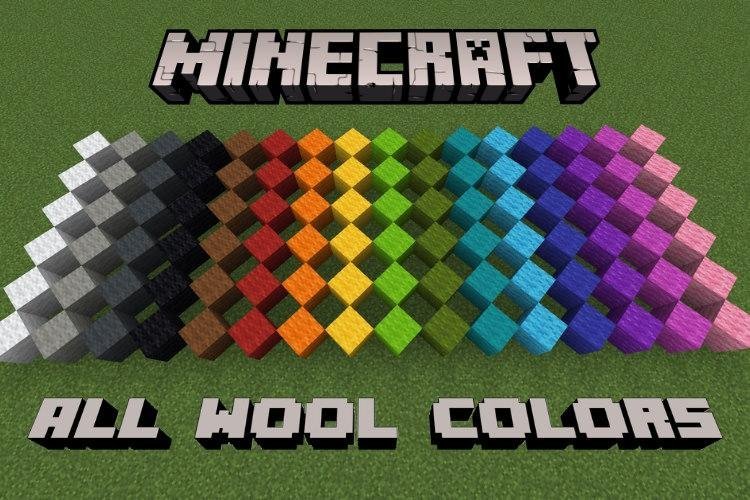
Wool shows up everywhere in a Minecraft base: beds, carpets, banners, pixel art and those enormous colour-coded storage halls. Since wool exists in all 16 dye colours, knowing how to recolour it properly saves you from hunting down naturally coloured sheep across half the map. There are two methods, and the second one is quietly one of the best resource tricks in the game.
All 16 Wool Colours
Wool can be white, light gray, gray, black, brown, red, orange, yellow, lime, green, cyan, light blue, blue, purple, magenta or pink. You will occasionally find ready-coloured wool inside structures, but crafting it yourself is far more reliable. Each colour needs its matching dye, and most dyes come from a single flower, plant or drop.
| Wool colour | Quick dye source |
|---|---|
| White | Bone meal |
| Light gray | Azure bluet |
| Gray | Black dye + white dye |
| Black | Ink sac |
| Brown | Cocoa beans |
| Red | Poppy |
| Orange | Orange tulip |
| Yellow | Dandelion |
| Lime | Smelted sea pickle |
| Green | Smelted cactus |
| Cyan | Green dye + blue dye |
| Light blue | Blue orchid |
| Blue | Lapis lazuli |
| Purple | Red dye + blue dye |
| Magenta | Allium |
| Pink | Pink petals |
Method 1: Dye Wool in the Crafting Grid
Open any crafting grid, drop in a wool block and a dye, and you get one wool block of the new colour. The recipe is shapeless, so placement does not matter. One dye handles exactly one block, which means a full stack of coloured wool costs a full stack of dye. Since the 1.20 update you are no longer limited to white wool either — a red block can go straight to blue without any intermediate step, which makes fixing design mistakes much cheaper than it used to be.
Method 2: Dye the Sheep Instead
Here is the method experienced builders swear by. Hold a dye, use it on a sheep, and the animal's wool changes colour on the spot. From then on, every shearing gives you 1–3 wool of that exact colour, forever, from that single dye. Breed two dyed sheep and the lamb usually inherits one of the parents' colours, or a blend when the two colours can mix, so a rainbow flock builds itself surprisingly fast.
Natural sheep spawn mostly white, with rarer gray, black and brown variants, and the famous pink sheep is a genuine one-in-a-thousand find. Whatever colour a sheep already wears, you can overwrite it with a new dye at any time — there is no such thing as a permanently stained sheep.
Which Method Should You Use?
For a one-off project, like a single bed or a small carpet, the crafting grid is quick and painless. For anything bigger — a map-art project, a coloured wool shop on a server, a rainbow banner wall — set up a dyed flock instead. The dye cost drops to almost nothing, and a simple pen of colour-sorted sheep becomes a wool factory that never runs dry.
Finding Coloured Wool in the Wild
You will stumble over ready-dyed wool while exploring, too. Villages, woodland mansions, ancient cities and pillager outposts all generate with wool blocks in their palettes, and shepherd villagers sell coloured wool directly. Looting those is fine for a handful of blocks, but the colours are whatever the structure picked — for a build that needs two hundred lime wool, the dyed flock at home is still the only sane supply chain.
Frequently asked questions
Can you dye coloured wool in Minecraft?
Yes. Since the 1.20 update, any wool colour can be recoloured directly in a crafting grid. You no longer need to start from white wool every time.
Can you only dye white sheep in Minecraft?
No. Dye works on sheep of any colour, natural or previously dyed, and the new colour replaces the old one completely.
How much wool do you get from shearing a dyed sheep?
Each shearing drops 1–3 wool blocks of the sheep's current colour, and the wool regrows after the sheep grazes, so one dye effectively gives unlimited coloured wool.
What happens when two differently dyed sheep breed?
The lamb takes the colour of one parent at random, or the blended colour if the two dyes can be combined, such as red and yellow producing an orange lamb.
More Minecraft guides
 What Do Llamas Eat in Minecraft? Wheat and Hay Bales ExplainedUpdated 12 November 2026
 What Do Pigs Eat in Minecraft? (Breeding Food Guide)Updated 12 November 2026
 What Do Polar Bears Eat in Minecraft? (The Honest Answer)Updated 12 November 2026
 What Do Horses Eat in Minecraft? Every Food and Its EffectsUpdated 12 November 2026
 All Wolf Variants in Minecraft and Where to Find ThemUpdated 12 November 2026