Home › Genshin Impact › Genshin Impact Elemental Reactions Explained: All Seven Elements and How They React
Genshin Impact Elemental Reactions Explained: All Seven Elements and How They React
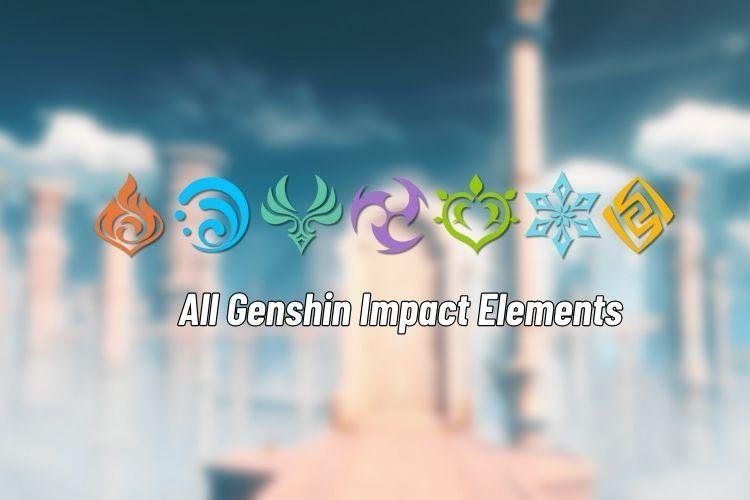
Combat in Genshin Impact revolves around one idea: no element fights alone. There are seven elements in Teyvat — Anemo, Geo, Electro, Dendro, Hydro, Pyro, and Cryo — and when two of them meet on the same enemy, they react. Reactions are where most of your real damage comes from, which is why a modest team with good reactions often out-damages a stronger team that ignores them.
Meet the Seven Elements
Each element has its own personality. Anemo (wind) is the great spreader, reacting with almost everything to spread elements across groups. Geo is the protector, creating shields through Crystallize rather than dealing reaction damage. Electro is the battery of the game, feeding energy to the team and taking part in more reactions than any other element. Dendro (nature) is the chemist, with layered reactions that chain into second and third stages. Hydro is the enabler that makes the biggest reactions possible, Pyro brings raw, self-sufficient damage, and Cryo controls the field by freezing enemies in place.
The Classic Reactions
| Reaction | Elements | What it does |
|---|---|---|
| Vaporize | Hydro + Pyro | Multiplies the triggering hit: 2x if Hydro hits a Pyro aura, 1.5x if Pyro hits a Hydro aura |
| Melt | Pyro + Cryo | Multiplies the triggering hit: 2x if Pyro hits a Cryo aura, 1.5x the other way round |
| Frozen | Cryo + Hydro | Locks the enemy in ice for a few seconds |
| Superconduct | Electro + Cryo | Small damage burst and cuts the enemy's Physical resistance by 40% |
| Electro-Charged | Electro + Hydro | Lightning keeps ticking damage over time and can jump to nearby wet enemies |
| Overloaded | Pyro + Electro | An explosion that knocks smaller enemies back |
| Swirl | Anemo + Pyro/Hydro/Electro/Cryo | Spreads the element to nearby enemies and deals damage of that element |
| Crystallize | Geo + Pyro/Hydro/Electro/Cryo | Drops an elemental shard; picking it up grants a matching shield |
Vaporize and Melt are called amplifying reactions: they multiply the damage of the single hit that triggers them, so they scale with that character's attack and crit stats. Order matters. A Hydro hit landing on a Pyro-covered enemy doubles its damage, while a Pyro hit on a Hydro-covered enemy gets the smaller 1.5x boost. Good players deliberately set up the aura first, then land the big hit in the right order.
The Dendro Family Tree
Dendro added a second layer to the system. Burning (Dendro + Pyro) sets the enemy alight for damage over time. Bloom (Dendro + Hydro) drops Dendro Cores on the ground that explode after a few seconds — and they hurt you too if you stand in the blast. Those cores can be upgraded: touch one with Electro and it becomes a homing projectile in Hyperbloom; touch it with Pyro and it bursts immediately in Burgeon. Meanwhile Quicken (Dendro + Electro) puts the enemy in a charged state, and adding more Electro triggers Aggravate, while adding more Dendro triggers Spread — both add a flat chunk of extra damage to your hits. Unlike Vaporize, these transformative and additive reactions scale mainly with the triggering character's level and Elemental Mastery.
Putting It Into Practice
Three habits separate reaction-savvy players from everyone else. First, bring an Anemo character with the Viridescent Venerer artifact set: its four-piece bonus shreds the enemy's resistance to the swirled element by 40%, which quietly boosts the whole team. Second, stack Elemental Mastery on characters who trigger transformative reactions like Hyperbloom, because their personal attack stat barely matters for that damage. Third, newer regions have added character-specific reaction variants on top of this classic system, but the fifteen reactions above are still the foundation every team is built on. Learn these, and every new character you pull becomes easier to use well.
Frequently asked questions
How many elemental reactions are there in Genshin Impact?
There are fifteen classic reactions: Swirl, Crystallize, Vaporize, Melt, Frozen, Superconduct, Electro-Charged, Overloaded, Burning, Quicken, Aggravate, Spread, Bloom, Hyperbloom, and Burgeon. Newer regions have added character-specific variants on top of these.
Why does the order of applying elements matter?
For Vaporize and Melt, the element that lands second gets the multiplier. Hydro hitting a Pyro aura deals 2x damage, while Pyro hitting a Hydro aura deals 1.5x. Setting up the aura first and triggering with the right element noticeably increases damage.
Which stat makes reactions stronger?
It depends on the reaction. Vaporize and Melt multiply the triggering hit, so they scale with that character's attack and crit. Transformative reactions like Hyperbloom, Burgeon, and Overloaded scale with the triggering character's level and Elemental Mastery instead.
What is the difference between Aggravate and Spread?
Both start from Quicken, which happens when Dendro meets Electro. Adding Electro to a Quickened enemy triggers Aggravate; adding Dendro triggers Spread. Both add flat bonus damage to the triggering hit, with Aggravate generally hitting harder.
More Genshin Impact guides
 Genshin Impact Original Resin Explained: How It Refills, What It Costs, and Where to Spend ItUpdated 12 November 2026
 Genshin Impact Pity System Explained: Soft Pity, Hard Pity, the 50/50 and Capturing RadianceUpdated 12 November 2026
 How to Get Characters for Free in Genshin Impact: Every Method That Costs NothingUpdated 12 November 2026
 How to Redeem Genshin Impact Codes: Website and In-Game Methods ExplainedUpdated 12 November 2026
 How to Unlock New Regions Early in Genshin Impact: Teleport Waypoints and Story OrderUpdated 12 November 2026