Home › Minecraft › All 16 Dyes in Minecraft and How to Get Every One
All 16 Dyes in Minecraft and How to Get Every One
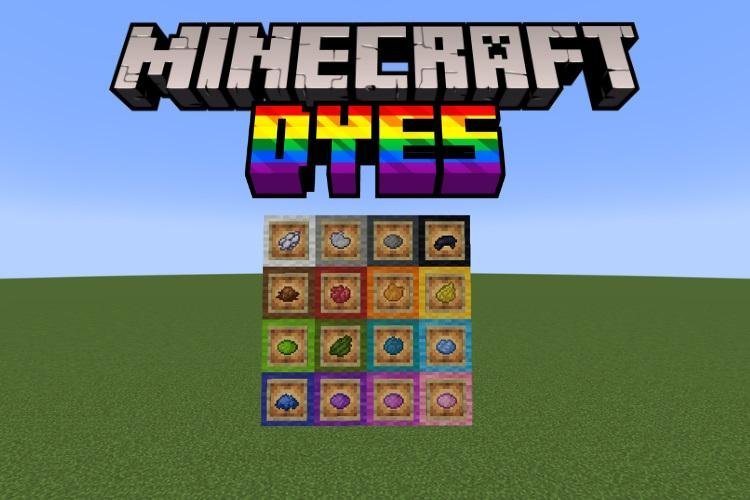
Colour is half the fun of building in Minecraft, and almost every coloured block you place starts life as a dye. There are 16 of them in total, and while a few drop into your lap almost by accident, others hide behind jungles, ocean floors and a furnace. This guide walks through every single dye, where its ingredient grows or drops, and the handful of blends you can only make by mixing.
Every Dye and Where It Comes From
Most primary dyes are made by putting a single ingredient in a crafting grid. Flowers are the workhorses here: poppies, tulips, dandelions and their rarer cousins each crush down into a matching colour. A few dyes come from less obvious sources, like ink sacs from squids or cocoa beans stripped off jungle logs. The table below gives you the fastest reliable source for each one.
| Dye | Main source |
|---|---|
| White | Bone meal or a lily of the valley |
| Light gray | Azure bluet, oxeye daisy or white tulip |
| Gray | Blend black dye with white dye |
| Black | Ink sac from a squid, or a wither rose |
| Brown | Cocoa beans from jungle trees |
| Red | Poppy, red tulip, rose bush or beetroot |
| Orange | Orange tulip or torchflower, or blend red and yellow |
| Yellow | Dandelion or sunflower |
| Lime | Blend green and white, or smelt a sea pickle |
| Green | Smelt a cactus in a furnace |
| Cyan | Blend green and blue, or break down a pitcher plant |
| Light blue | Blue orchid, or blend blue and white |
| Blue | Lapis lazuli or a cornflower |
| Purple | Blend blue and red |
| Magenta | Allium or lilac, or blend purple and pink |
| Pink | Peony, pink tulip or pink petals, or blend red and white |
The Blended Dyes
Seven colours never drop from a plant or mob directly. Gray, lime, cyan, light gray, light blue, purple, magenta and pink shades are made by combining dyes you already own, and the recipes are forgiving about where items sit in the grid. Purple is the simplest example: one blue plus one red. Magenta has several routes, including purple plus pink, which makes it a good way to stretch rare ingredients further.
Shortcuts Worth Knowing
If a biome refuses to cooperate, you have backup options. Wandering traders have a chance to sell three pieces of any dye for one emerald, and shepherd villagers trade dyes at higher levels too. Yellow and orange dye can even turn up inside suspicious gravel at trail ruins if you brush enough of it. Brown is generally considered the rarest dye, because cocoa beans only grow on jungle logs and jungles can be thousands of blocks from spawn.
What Dyes Are Actually For
Dyes recolour wool, beds, candles, shulker boxes and leather armour, and they are essential for crafting concrete powder and stained glass. Ring eight terracotta or eight glass around a single dye to colour the whole batch at once. Dyes also tint firework stars, banner patterns on a loom, and the text on signs, where a matching glow ink sac can make the letters shine brighter.
One last tip: dye the sheep, not the wool. A single dye colours a sheep permanently, and every shearing after that gives you matching wool for free, which turns a rare colour into an unlimited supply.
Frequently asked questions
What is the rarest dye in Minecraft?
Brown dye is usually called the rarest, because its only ingredient is cocoa beans, which grow exclusively on jungle tree logs. If your world has no jungle nearby, a wandering trader is your best alternative source.
Can kelp make green dye in Minecraft?
No. Kelp can be dried and eaten or crafted into blocks, but it never produces dye. Green dye only comes from smelting a cactus in a furnace.
How do you make purple dye in Minecraft?
Combine one blue dye and one red dye in a crafting grid. Purple cannot be harvested directly from any flower or mob, so stock up on lapis or cornflowers and poppies first.
Can you buy dyes from villagers?
Yes. Shepherd villagers can sell any of the 16 dyes as you level them up, and wandering traders sometimes offer three dye for one emerald, which is handy for colours your local biomes lack.
More Minecraft guides
 What Do Llamas Eat in Minecraft? Wheat and Hay Bales ExplainedUpdated 12 November 2026
 What Do Pigs Eat in Minecraft? (Breeding Food Guide)Updated 12 November 2026
 What Do Polar Bears Eat in Minecraft? (The Honest Answer)Updated 12 November 2026
 What Do Horses Eat in Minecraft? Every Food and Its EffectsUpdated 12 November 2026
 All Wolf Variants in Minecraft and Where to Find ThemUpdated 12 November 2026